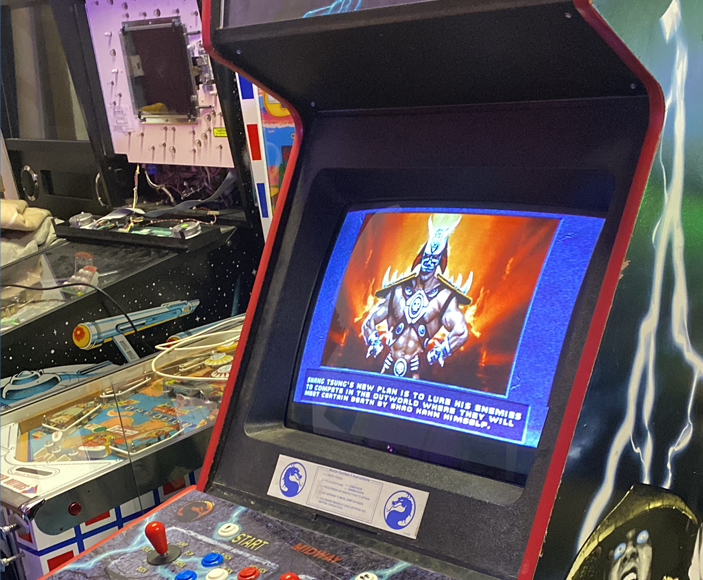

At our club, we take pride in giving classic pinball machines a second life. We carefully source older machines, repair and restore them with expert craftsmanship, and ensure every detail is fine-tuned for smooth, reliable play. Once fully refurbished, these pinballs are added to our club’s collection, where members can enjoy rare and vintage titles that might otherwise have been lost to time. This process not only preserves the history of pinball but also creates a constantly evolving lineup of machines for our community to discover and enjoy.
Our pinball maintenance service ensures your machines stay in top playing condition, whether you need routine cleaning, repairs, or full mechanical checks. We can arrange an engineer to visit on site, diagnose issues, replace worn parts, and fine tune gameplay to keep everything running smoothly. Whether it is a single machine or a full lineup, we make sure your pinball setup stays reliable and ready for action. Contact us for help and advice.
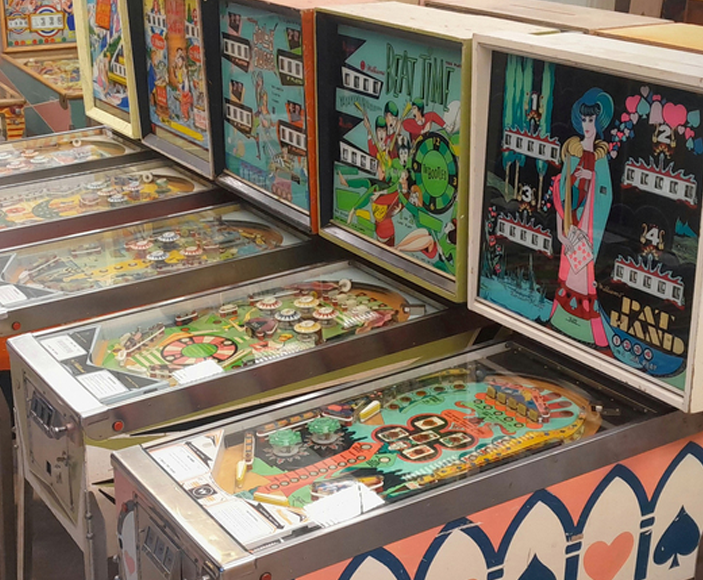 We have recently managed to procure four classic electromechanical (EM) pinball machines from a fantastic find, and all four are now heading to Skillshot for what is going to be a substantial restoration project. These machines have clearly had a hard life and have been sitting for some time, but underneath the dirt, rust and years of wear are four pieces of pinball history that deserve to be looked after. Rather than seeing these old machines broken for parts or left to deteriorate further, our aim is to carry out a proper EM pinball restoration and get them back to a condition where they can be enjoyed and played again.
There is going to be a lot of work involved before any of these vintage pinball machines are ready to return to service. One of the first jobs will be tackling the corrosion that has built up across the metalwork. Rusty components will need to be removed and, where appropriate, sand blasted to remove the corrosion, before being refinished and protected. Each machine will be carefully stripped and assessed rather than simply trying to make it work as quickly as possible. Restoring an old electromechanical pinball machine properly means dealing with decades of dirt, wear and previous repairs while trying to preserve as much of the original machine as possible.
The electrical and mechanical restoration will be another major part of the project. EM pinball machines rely on relays, coils, switches, score reels, stepper units and a huge amount of wiring rather than the computer boards found in modern games. Before we consider powering them up, the electrics will need to be thoroughly inspected and the mechanisms checked, cleaned and repaired where required. This is one of the reasons an EM restoration can become such a big job: getting a machine to light up is one thing, but getting every relay, switch, coil and mechanical unit operating reliably as originally intended is something completely different.
We will also be paying particular attention to the playfield restoration and preservation. Years of dirt and ball movement can be extremely hard on an original pinball playfield, so each one will be carefully stripped, cleaned and inspected for wear and damage. Our intention is to preserve the original artwork wherever possible, carry out the necessary repairs and then protect the surface so these machines can actually be played without continuing to damage what remains. The cabinets will receive equally serious attention. After repairs and preparation, we plan to silk screen the pinball cabinets back to their original artwork, bringing back the appearance and character these games had when they originally left the factory.
This isn't going to be a quick restoration, and that's really the point. These four machines have survived long enough to reach us and we think they deserve more than a quick clean and repair. The goal is a complete vintage pinball refurbishment, covering the cabinets, playfields, metalwork, electrics and electromechanical mechanisms, while remaining sympathetic to the original machines. We'll be documenting the restoration work as it progresses, including the inevitable problems we uncover along the way. Hopefully, at the end of it we'll have four rescued EM pinball machines looking great, playing properly and ready for many more years of pinball rather than slowly disappearing through neglect.
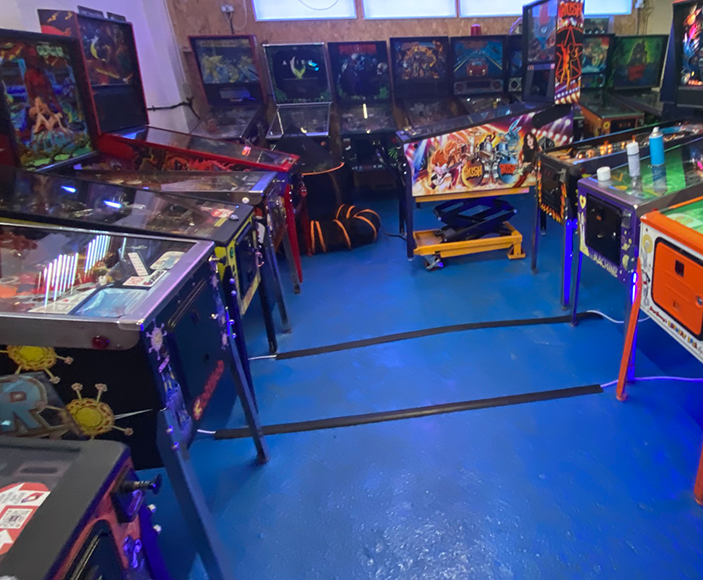 Spending time on every machine helps keep games fast, reliable and fair, ensuring everyone has the best possible experience whether they're competing for league points or just enjoying a casual game.
We'll also be taking the opportunity to fix any minor issues we've spotted over recent weeks, test every feature and make sure the machines are ready for a full day of competitive play. Our aim is always to have every game performing exactly as the designer intended, with responsive flippers, reliable ball handling and smooth gameplay from the first ball to the last.
We can't wait to welcome everyone for the final league meet of the year. It's been another fantastic season, and we're looking forward to finishing it with a room full of clean, well-maintained machines ready for some great competition. Good luck to everyone taking part, and we'll see you on league day!
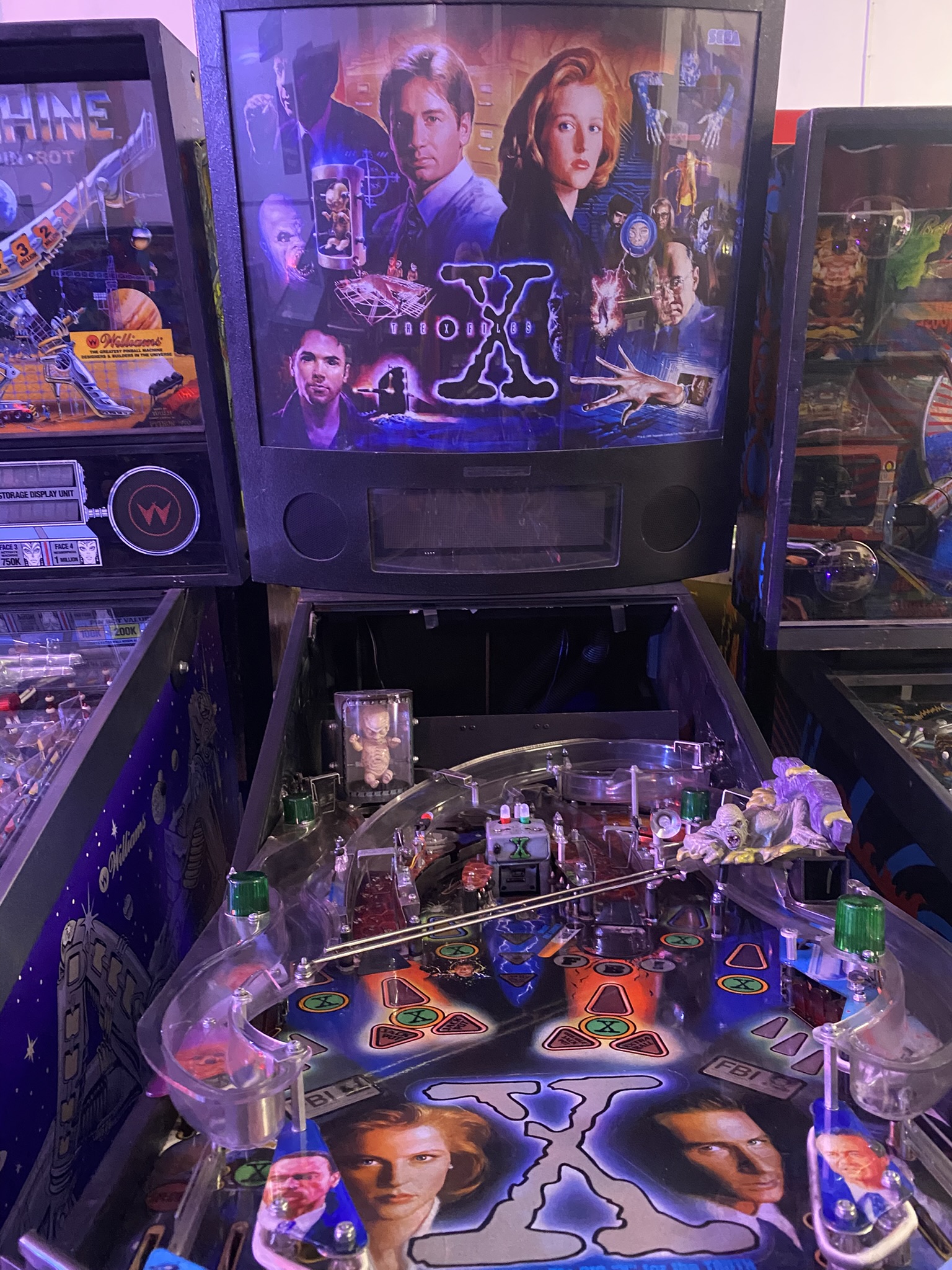
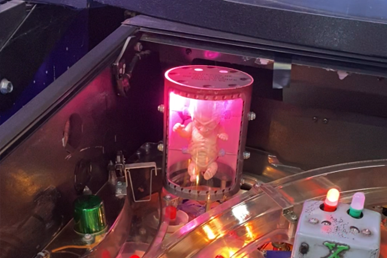
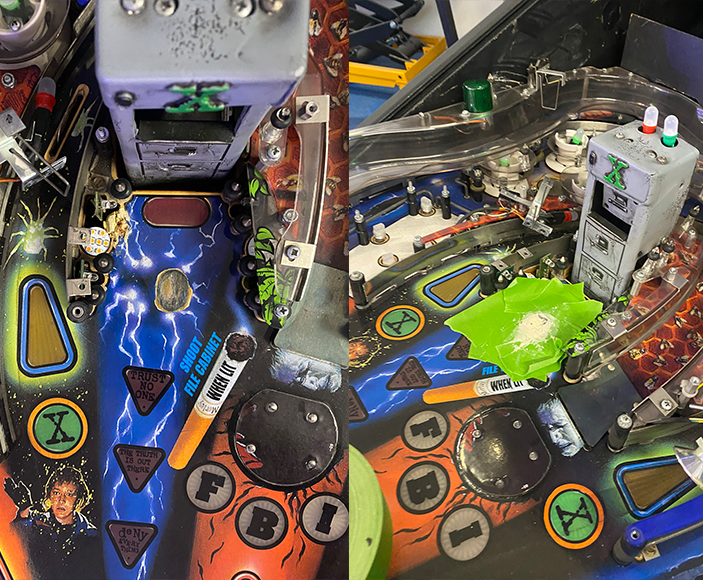 The X-Files has finally made its way onto the workshop bench and, like many machines of its age, it needed a little attention before it was ready to return to action. The most obvious issue was a section of wear on the playfield around the magnet. This is a common area to suffer damage on heavily played examples, as the ball repeatedly pauses and spins in the same location. While the wear tells the story of thousands of games played, we wanted to make sure the rest of the machine was brought back up to the standard players expect at Skillshot.
With the playfield inspected, we turned our attention to the lighting. Every general illumination bulb has been upgraded, giving the machine a much brighter, cleaner appearance while reducing power consumption and maintenance. The improved lighting really brings the artwork to life, making the playfield easier to read and giving every shot a little more impact.
While we were inside the machine, all of the ageing rubbers were replaced with a fresh set. New rubbers not only improve reliability but also make a huge difference to the way a pinball machine plays. The ball rebounds with more energy, shots feel crisper, and the game regains the fast, lively feel it had when it first left the factory.
To complete the restoration, we added a set of atmospheric alien-green LEDs that perfectly suit the mysterious theme of The X-Files. Rather than simply making the machine brighter, the lighting gives it a moody, otherworldly feel that complements the artwork, creating the impression that Mulder and Scully really are investigating something unusual beneath the glass.
With the maintenance complete, The X-Files is back where it belongs on the arcade floor. It now plays fast, looks fantastic, and is ready for players to uncover the truth. Whether you're chasing high scores, taking on the game's challenging modes, or simply reliving one of Sega's most memorable licensed pinball machines, it's once again ready for action at Skillshot.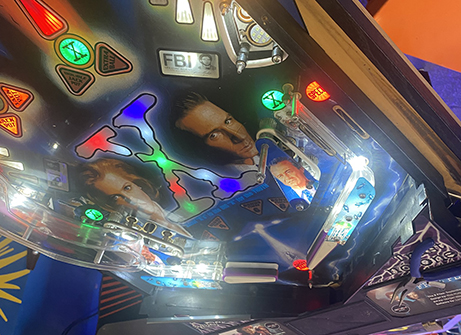
 We have been keeping ourselves busy over the last few months, perhaps a little too busy. A steady stream of new pinball machine acquisitions has meant that much of our time has been spent collecting, moving, setting up, and enjoying new additions to the lineup. While it has been great to see the collection grow, it has also meant that some of the maintenance work has not received quite as much attention as it deserves.
The workshop backlog has slowly grown as new projects arrived, but that is about to change. We are now making a concerted effort to get some of the machines that have been waiting patiently for attention onto the bench. There is something satisfying about bringing a machine back from the dead, and a few of our games are definitely due some workshop time.
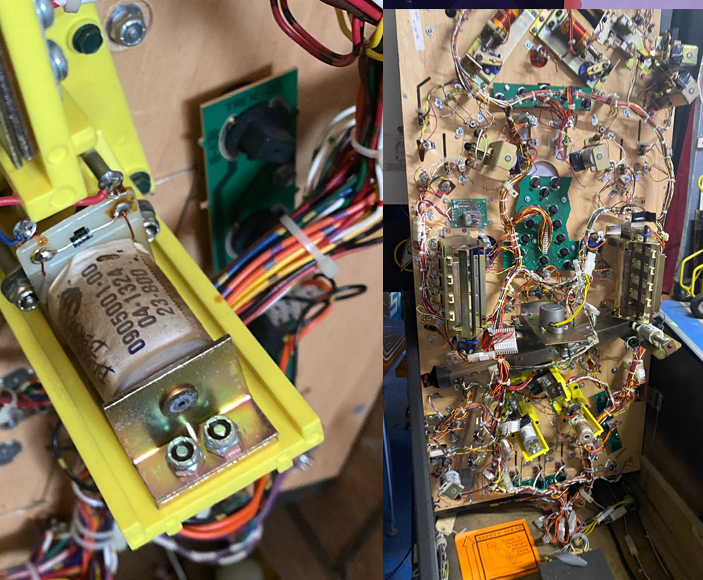
At the top of the list is Star Trek 25th Anniversary, which did not simply develop a fault, it pretty much blew up. The machine suffered a significant failure that left it completely out of action and has since become a major diagnostic project. Between blown components, power supply issues, and the challenge of tracing faults through ageing electronics, it has provided plenty of opportunities to put our troubleshooting skills to the test. Thankfully, progress is being made and we are hopeful of seeing it boldly go once again in the near future.
Also on the bench is Road Kings, one of our latest acquisitions. The machine already plays well, but there are a number of smaller jobs that need completing before we can consider it fully finished. Some backbox lighting needs attention, the knocker assembly needs reinstating, and a general tidy up will help bring the machine up to the standard we want for regular play.
Rounding out the current workshop queue is The X-Files, which has a few issues of its own that need working through. As with many machines from the era, the challenge is often not finding a fault but deciding which fault to tackle first. A methodical approach, plenty of testing, and a bit of patience should see it back investigating unexplained phenomena before too long.
While we have thoroughly enjoyed expanding the collection, maintaining the machines is every bit as important as acquiring them. The good news is that the workshop lights are back on, the soldering iron is heating up, and the repair queue is moving once again. With Star Trek, Road Kings, and The X-Files all lined up for attention, there should be plenty of interesting repair stories to share over the coming weeks.
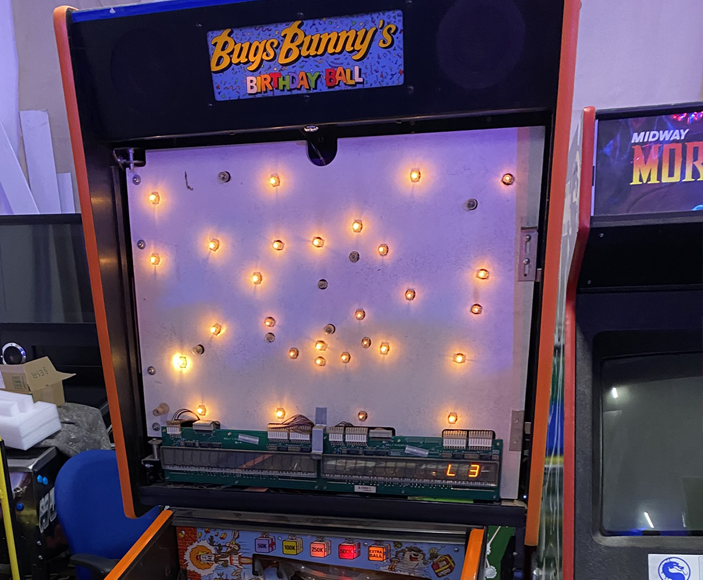 Fixing Bugs Bunny's Birthday Ball turned into a proper diagnostic exercise after the machine refused to boot entirely. There were no partial resets or intermittent crashes this time, just a completely lifeless startup. The first step was to confirm the obvious: incoming power. Meter readings showed that voltage was solid coming through the filter and up to the board, so the issue clearly lay beyond the supply path.
With good power confirmed at the board input, attention shifted to the board itself. Most of the machine had already been upgraded with Rotten Dog replacement boards, which ruled out many common failure points. That left the only remaining original board as the prime suspect. Since the voltage was reaching it correctly but the machine would not initialise, the fault had to be occurring within its regulation or processing section.
Closer inspection revealed failed components on that board, likely within the power regulation circuitry. Even though correct voltage was present at the input, it was not being properly regulated or distributed internally. After identifying and replacing the failed components and checking surrounding traces and solder joints, the board was reinstalled for testing.
The result was immediate and satisfying. The machine booted cleanly as soon as power was applied, with no hesitation or error state. It is always rewarding when careful tracing and methodical diagnosis lead directly to the solution without unnecessary guesswork.
With the machine now stable and running properly, the focus shifts to presentation and reliability upgrades. A full clean is next on the list, followed by modernising the general illumination with LED bulbs. This will brighten the playfield, reduce heat load, and give the machine a fresher look while keeping it dependable for future league nights.
 Using AI to help diagnose and repair a Star Trek: 25th Anniversary pinball machine was a surprisingly useful experiment. The idea was not to replace hands-on troubleshooting but to see whether an AI assistant could help identify failure patterns, point toward likely root causes, and suggest repair sequences based on symptoms. We expected vague guesses, but the level of reasoning and cross-referencing was far more practical than anticipated.
The machine in question was presenting a nasty combination of faults: it was blowing transistors at Q3, displaying a white screen, and refused to boot. Normally, that cocktail points to a mix of driver board failures and logic board issues, and the order in which those issues are chased can make the difference between a quick repair and a long weekend of board swapping. Feeding the symptoms into the AI produced a structured list of possibilities that matched how an experienced board tech might think.
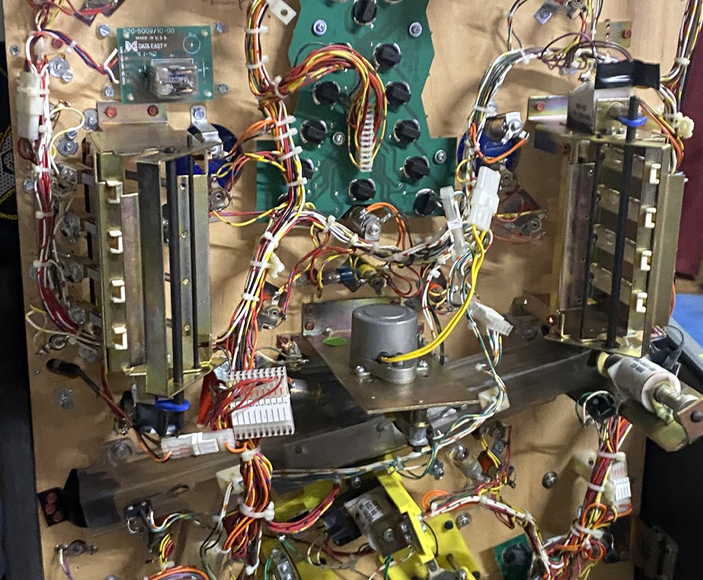
The first lead was the blown Q3 transistor. On this title, Q3 drives a specific coil, and the AI suggested checking not only the transistor but the coil resistance, coil diode integrity, predriver transistor and associated connector pins. It also flagged the possibility of a locked-on signal upstream from the logic section, which can cause repeated transistor failures. That alone saved time by pushing us toward checking triggering rather than just repeatedly replacing components. AI pointed toward the right left turbo bump can see from the picture below it was almost right!
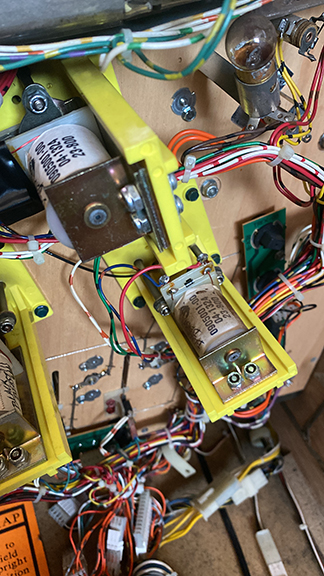 The white screen fault sent us down a different path, as AI recommendations pointed toward video output failure on the MPU or the power section feeding the display logic. It reminded us to test 5V and 12V rails under load, not just open-voltage, which is a subtle but important distinction. Low or dirty DC rails can easily produce white screens, crashes, or no-boot conditions on Data East hardware.
The no-boot symptom tied everything together. The AI suggested verifying reset circuitry, clock generation, EPROM seating, and corrosion around the battery area-checks that any pinball tech would eventually get to, but it was notable that AI recommended performing them in a specific order based on probability and failure frequency for that era of hardware. That sequencing is something we did not expect from a general AI assistant.
In the end, we did not hand the repair over to AI, nor could it magically fix the machine, but as a diagnostic assistant, it genuinely helped narrow the field faster and encouraged a more systematic workflow. The unexpected takeaway is that AI has real potential as a repair companion: not to replace the tech, but to help question assumptions, suggest branches to test, and speed up fault isolation. We went in expecting a gimmick and came out thinking this might be somthing that we work on developing as a software company.
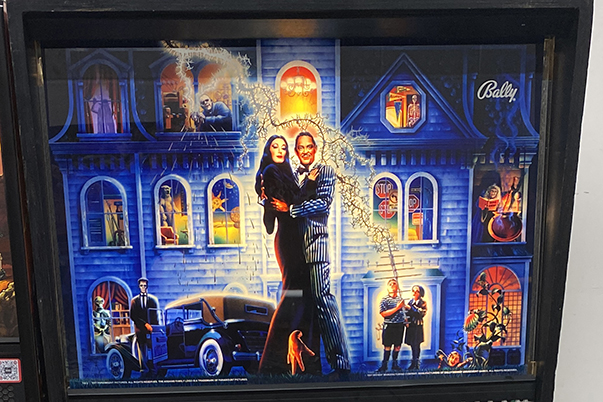
 We recently swapped out the original DMD on The Addams Family pinball machine and upgraded it with the new Eliodot screen from our friends at PinSound. While colour DMD upgrades are popular, this is one machine where we prefer to keep the classic dot matrix look intact. That said, the original display was showing its age and clearly needed a refresh.
The Eliodot screen delivers a noticeable improvement in contrast, making animations, scores, and game information much clearer without changing the original visual style. Blacks are deeper, dots are sharper, and the display is far easier to read during fast paced play. It feels like the game looks how it should have always looked when it left the factory.
Another big advantage is the improved brightness control, allowing us to fine tune the display to suit the room lighting and surrounding machines. This makes the screen comfortable to look at without being overpowering. Overall, it is a respectful upgrade that refreshes the machine visually while preserving the classic character that makes The Addams Family such an iconic pinball table.
See for yourself the new product and other cool stuff at Pinsound's website. 
 We were not idle over the Christmas break, and while the doors were closed, plenty of work was happening behind the scenes to get the lineup back to fighting fit. The downtime gave us a great opportunity to tackle issues, fine tune gameplay, and make improvements that are not always possible during busy open sessions.
On Getaway, we tracked down an issue with the Supercharger that had been affecting gameplay. After investigation, the problem was identified as blown transistors on the accelerator board. These were replaced, restoring the Supercharger to full working order and bringing back the fast, satisfying shots the machine is known for.
Champion Pub also received some attention, with a slight layout adjustment made to prevent balls from becoming trapped during play. The changes are subtle but effective, improving flow and reducing interruptions so games run more smoothly from start to finish.
We also carried out routine mechanical maintenance across the lineup, including replacing worn flipper springs on ABBA. Fresh springs make a noticeable difference to responsiveness and shot consistency, helping keep the game feeling sharp and reliable.
All of this work means the machines are in great shape and ready for action as we head into the new year. We are looking forward to welcoming players back to enjoy a lineup that has been carefully serviced, adjusted, and prepared for many more great games ahead.
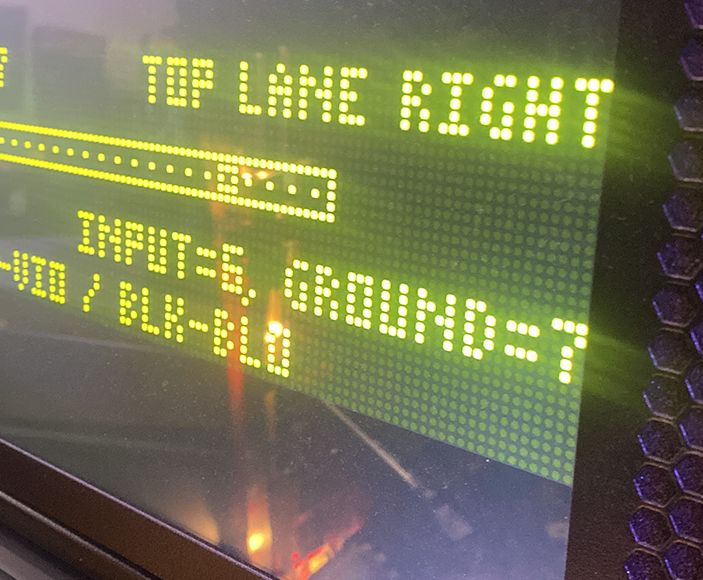
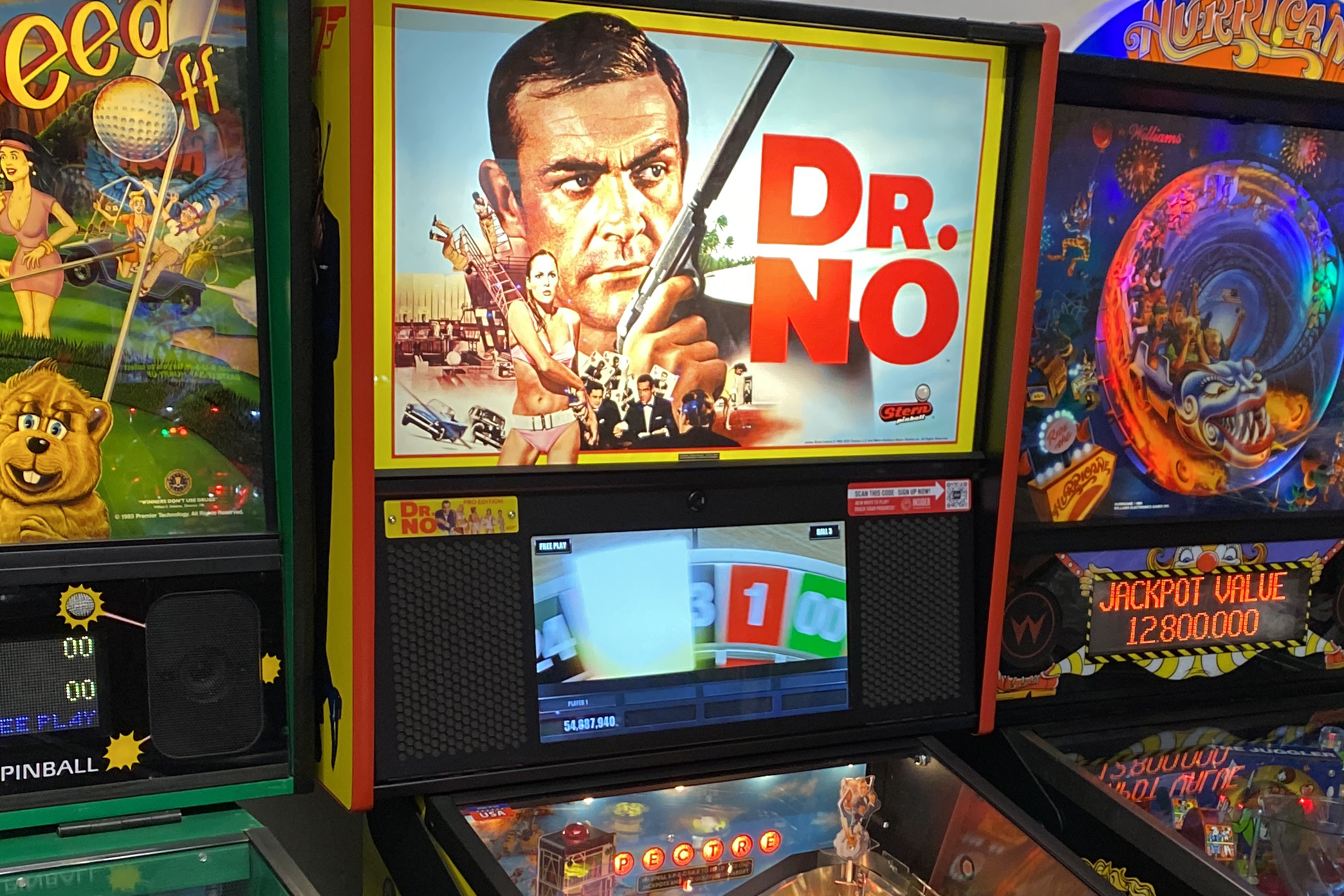
While playing my James Bond pinball machine, I noticed the top lane switch wasn't registering any points. At first, it seemed like a simple switch adjustment issue, but testing the switch in diagnostic mode showed it was working mechanically - the problem was electrical. Tracing the wiring back to the node board revealed the culprit: a worn-out connector pin that had loosened over time. The switch's signal wasn't reliably reaching the board, causing the game to miss every shot through that lane.
The fix was straightforward but required some patience. I carefully removed the damaged pin from the connector housing, crimped a new Molex terminal, and reinserted it into the housing to restore a solid electrical connection. Once reassembled, the top lane registered perfectly again, and scoring returned to normal. This kind of issue is actually pretty common on modern Stern machines, as their node boards and connectors can experience wear from vibration and repeated service. A good repinning now and then keeps these games playing like new - and saves a lot of head-scratching during troubleshooting.
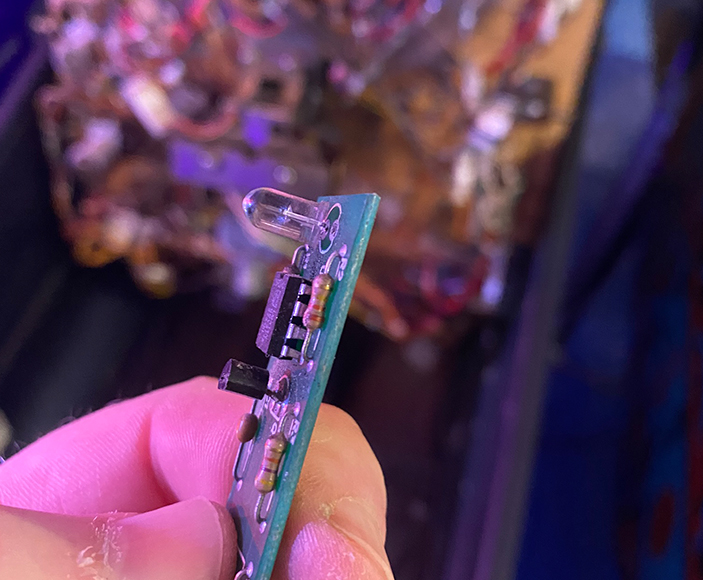
Fixing the X-Files pinball machine turned out to be a straightforward repair . The problem began when the machine started behaving unpredictably during gameplay - cabinet hits weren’t registering. After some investigation, I discovered that the issue traced back to a few broken opto LEDs on the playfield. These opto sensors are used throughout the machine to detect ball movement without mechanical contact, so when they fail, gameplay logic gets confused.
The next step was to remove the faulty opto LEDs. This required carefully accessing the affected circuit boards beneath the playfield and desoldering the bad components without damaging the traces. Opto assemblies can be delicate, and the infrared LEDs aren’t always visibly burnt out, so each one had to be tested with a camera or multimeter before replacement. Once confirmed, I desoldered the non-working LEDs, cleaned the solder pads, and prepared the board for the new parts.
After sourcing the correct replacements (MT5000UR TLRH180P 165-5100-00 165-5052-00), I soldered in the new opto LEDs and reinstalled the boards. I double-checked alignment, polarity, and solder joints before powering up the machine. The moment of truth came when the machine booted smoothly, and all the previously unresponsive switches worked flawlessly again. Watching the X-Files pinball come back to life with smooth, accurate ball tracking made the effort completely worthwhile. It was a satisfying repair that not only solved the problem but also deepened my understanding of the game’s optical sensing system.

“We had our local society meet and greet at Skillshot. A great venue and something different, we had our highest turnout for a meeting.”
“If i lived closer i would be here every week.”
“The machines are great, the people are great too”
“I had my suprise 60th there. The family loved it as it was something completely different.”
Club Nights: £15 unlimited free play
Sign up to Skillshot socials or alerts to know when we are open, you wouldn't want to missout
Tournaments and League: See the events page for more info
VIP and Private Hire: Contact us for your pinball themed night
Follow us